The Anchor
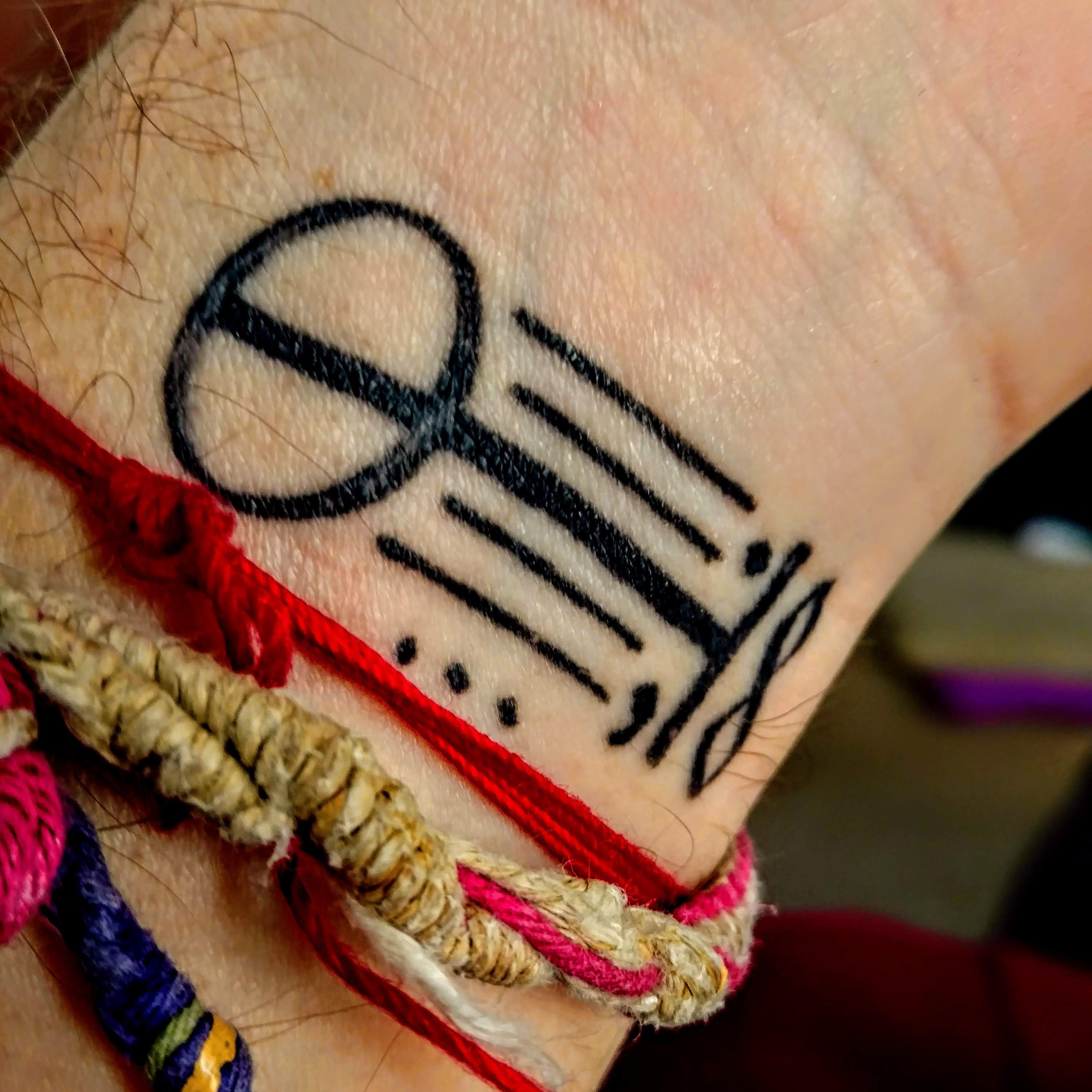
Design by mugwump67; inked by Jay Jay at Permanently Scarred.
The semicolon (;) represents the moment where the structure changes for cadence: a pause that refuses to end. It is the bridge between the weight of experience—our habits, our memories, the hard-won knowledge we’ve earned—and the sanctuary found in adjusting those patterns.
Those patterns served us once. Some remain valuable: the grit to get things done when the chips are down, or the wisdom to do better next time. But we often try to live as if the trauma never happened. That is an impossible goal. Whatever happened, happened; it shaped us. But it does not have to block us.
There is a future. There is a tomorrow. While our choices may feel narrow in the meantime, we still have them. We can point ourselves toward that sanctuary we crave and take steps—haltingly, hurriedly, and certainly with mistakes. (No “perhaps” about it—you’re going to stumble.) However, the only true mistake is staying stuck and giving up.
The semicolon (;) is a unique mark. It is not a comma—a mere pause for clarity. It is not a period—the definitive end. It is not a colon—the stop that signals a new idea. Instead, the semicolon invites the reader to move forward; linking the weight of the past to the potential of the next clause, adding depth until the thought is whole.
It says: “This isn’t over yet. I’m not throwing this away.” It is an invitation to pause, to think, and to proceed with intent rather than recklessness.
That semicolon is the bridge between the past and the future. It is the physical mark of what “intention” truly is: the chance to analyze and redefine our own internal programming.
Notes from the Lab: Structural Integrity & The “Frankencandle”
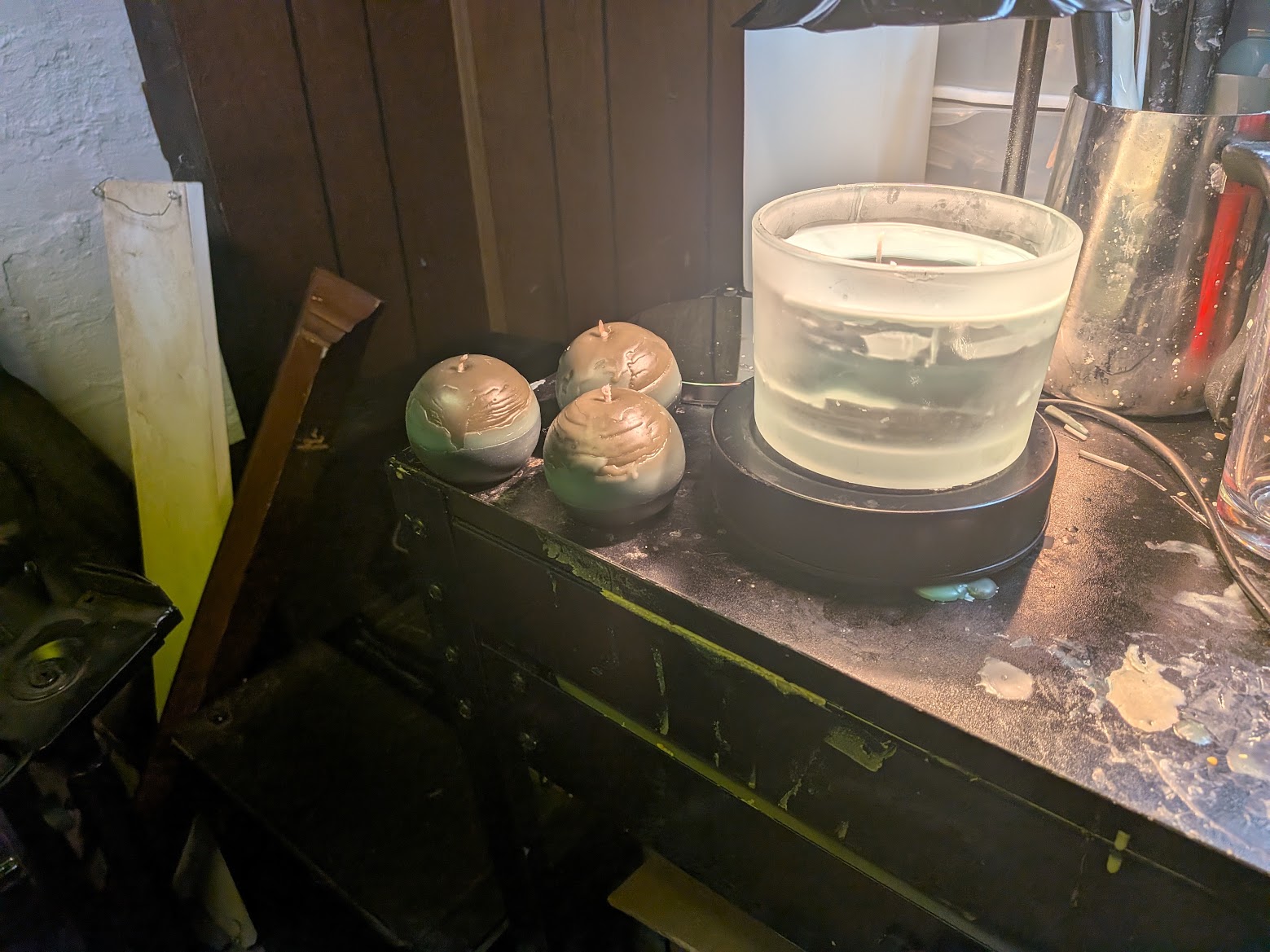
Specimen 04-A: The Frankencandle. > Uneven cooling, visible seams, perfect scent throw.
“Every double-poured texture and uneven base is a step toward the clearing.”
There is a specific logic to the “Frankencandle” that mirrors the semicolon. In the lab, we often mistake “smooth” for “functional.” But this specimen proves that the seams—the literal points where two different pours of wax met and struggled to bond—are where the character lives. Just as the semicolon refuses to let a sentence die, these seams refuse to let the candle be “perfectly” boring. They are the evidence of the pause. They are the structure becoming the sanctuary.
mugwump|Kohatsu